

Independent Prison Oversight Since 1844
The Correctional Association of New York (CANY) is designated by law to provide independent monitoring and oversight of state prisons in New York State.
Search for more information
About CANY

CANY, under §146 of New York’s Correction Law, is charged with visiting and examining the state’s correctional facilities to identify and report on prison conditions, the treatment of incarcerated individuals, and the administration of policy promulgated by the executive and legislature.

The Latest
Correctional Association of New York’s Monitoring Findings

Data
CANY systematically compiles data on the state prisons and is now releasing relevant data to the public in the form of dashboards, processed data, and source data.
Post-Visit Briefing Reports
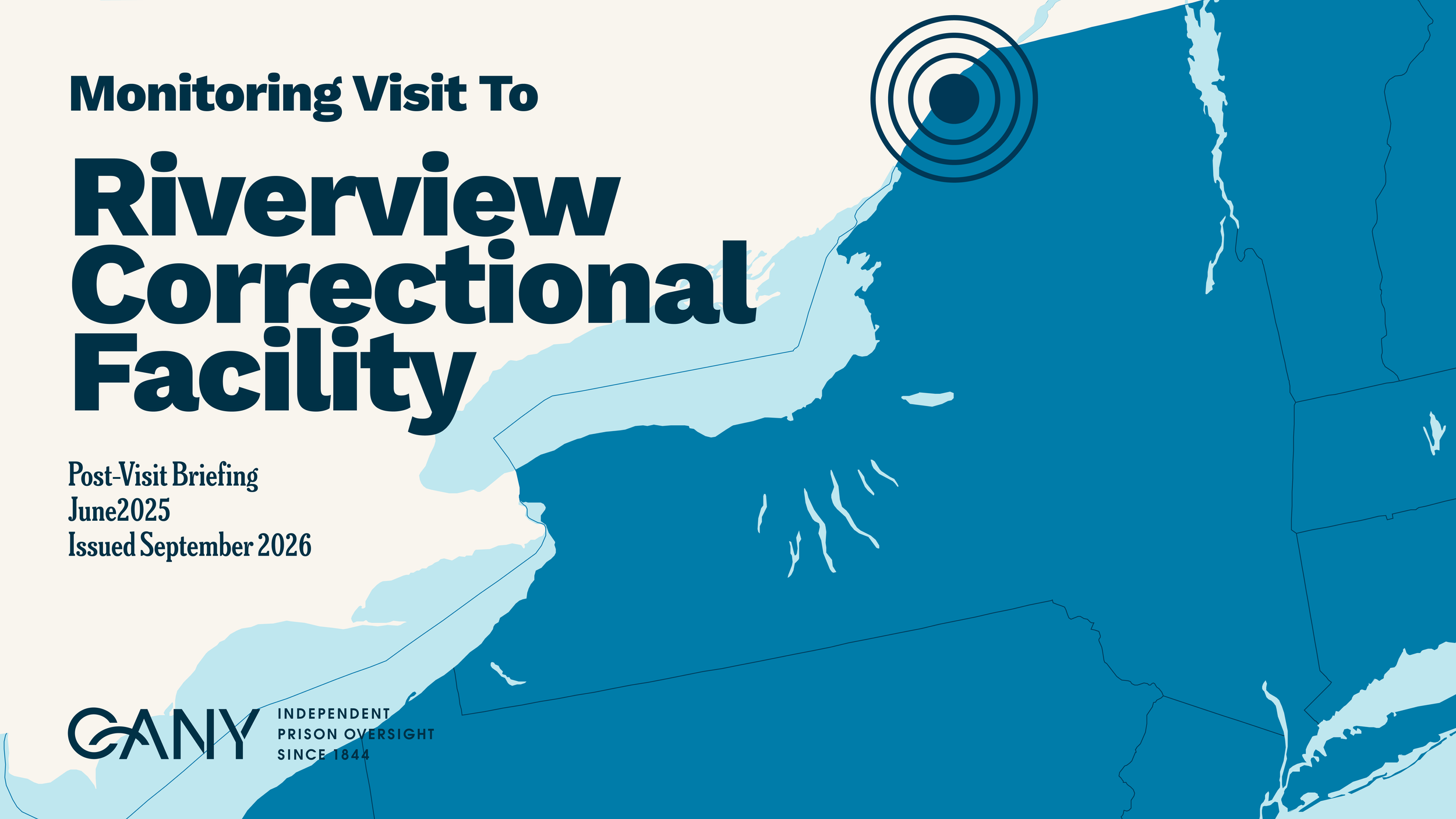
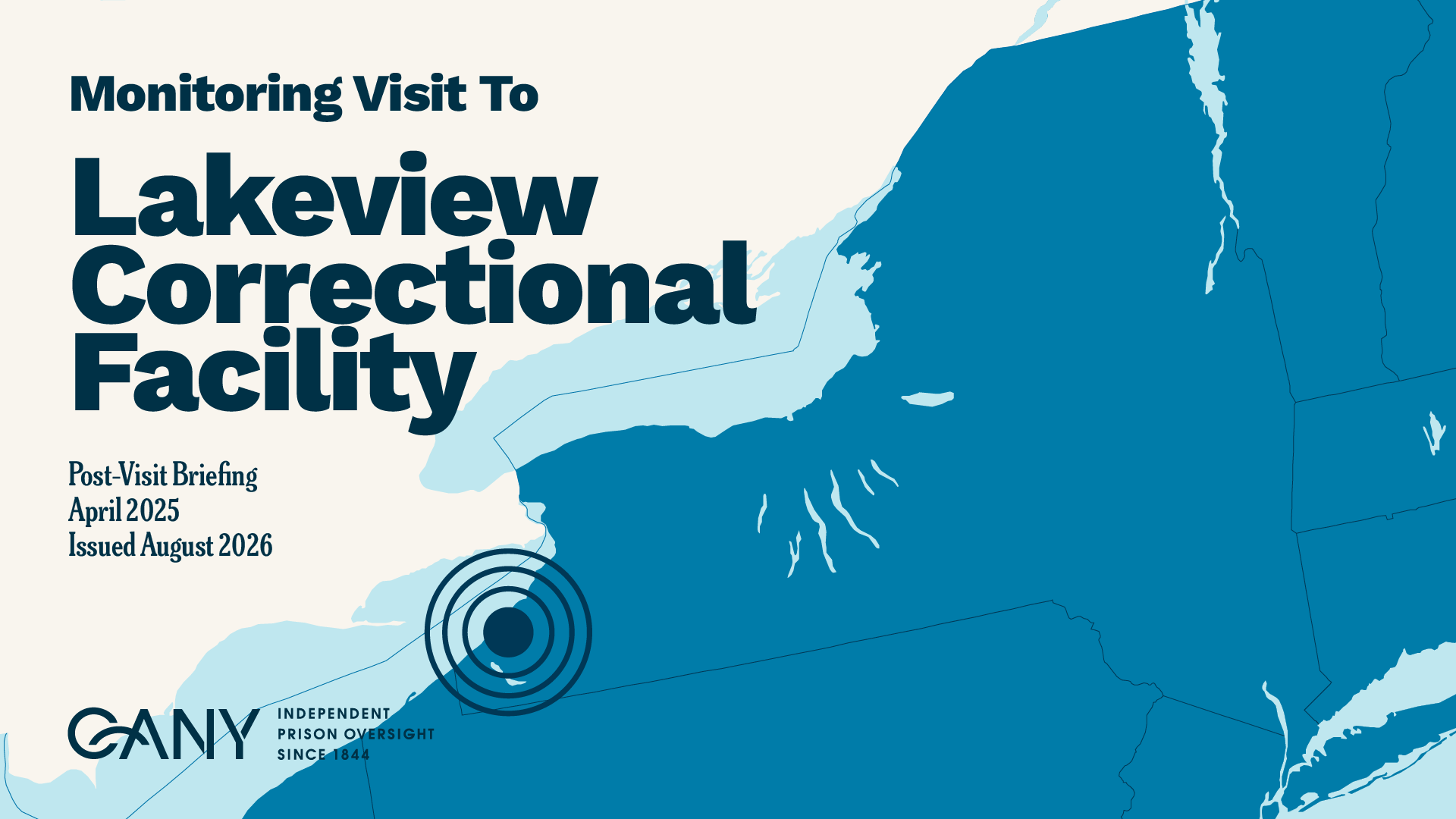
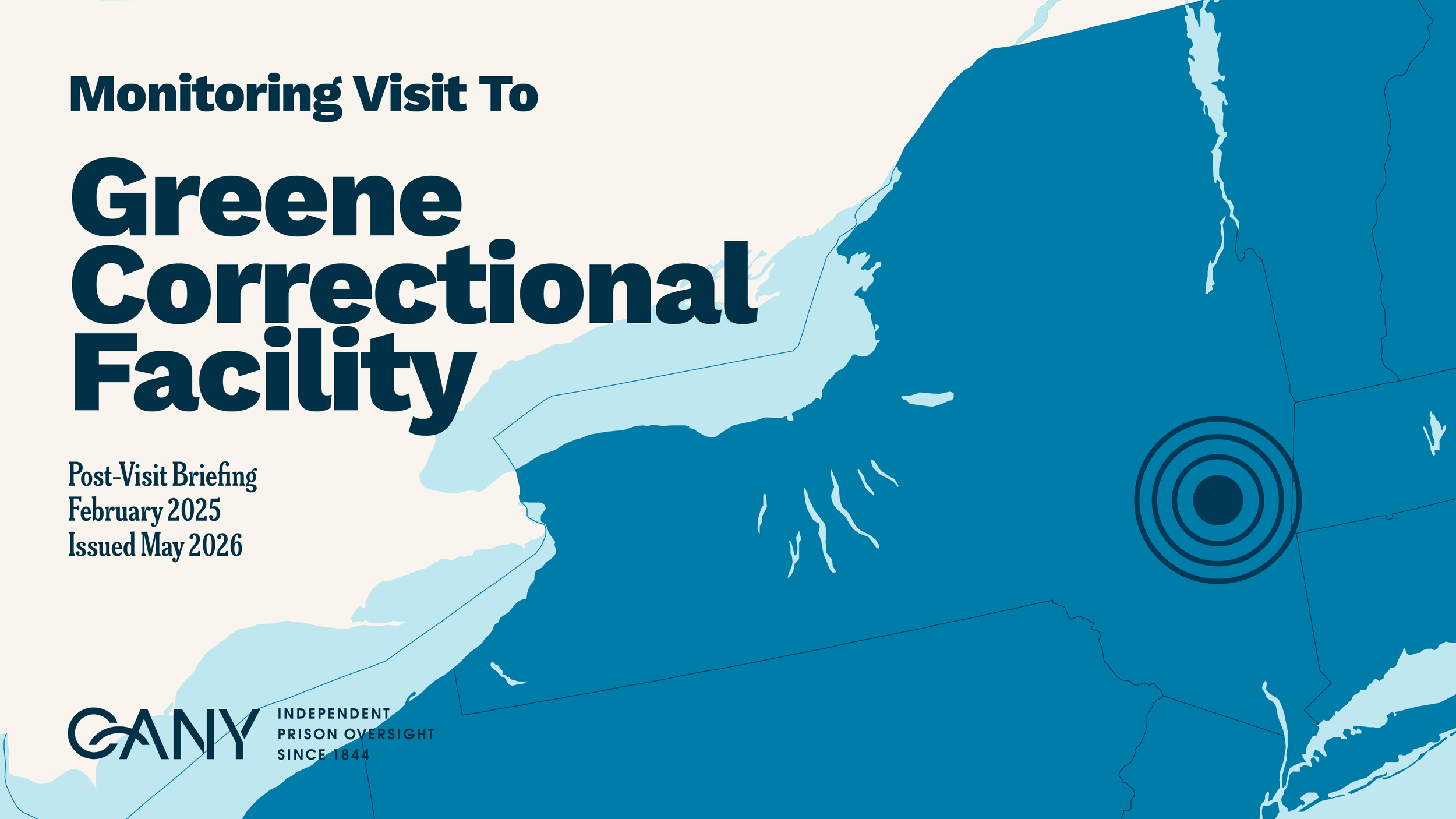
As part of its mandate, CANY releases Post-Visit Reports following in-person monitoring of select state prisons in New York. Each report includes observations, recommendations, and a written response to any findings and proposals from the Department of Corrections and Community Supervision.
CANY’s recent Post-Visit Reports are listed below and other reports can be found by accessing CANY’s Post-Visit Briefings and Recommendations.








GET INVOLVED
Support Transparency of New York State Prisons
Help us continue to provide strong, independent oversight of prisons in New York by contributing to our campaign to raise $175,000 in individual contributions.
CANY offers unique career opportunities and internships intersecting with prisons monitoring and oversight, policy and communications, and other areas related to the administration of prisons in New York.
Sign-up to our newsletter to learn more our work, stay in the know about the latest events and ways to be involved with CANY.